
Definitions:
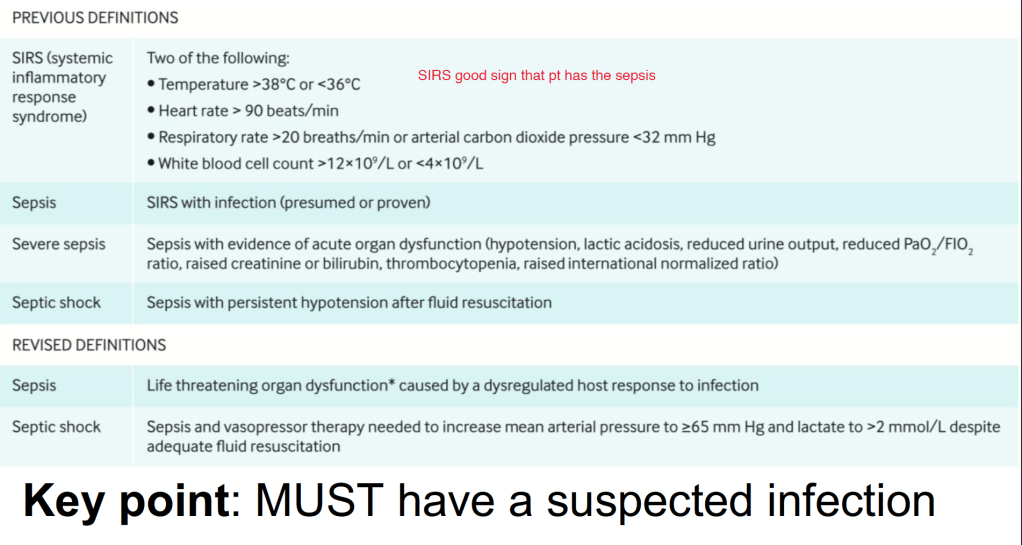
Sepsis: A severe systemic inflammatory response to an infection that leads to physiologic, pathologic, and biochemical abnormalities (a dysregulated response)

Risk Factors for Sepsis:
Male, Age (elderly), Cancer, Recent surgery, IV Drug Use, Indwelling Lines
Cool fact!!: Some hospitals have CODE SEPSIS teams, b/c evidence shows the quicker we treat, the lower the mortality

Surviving Sepsis Guidelines provide insight into how to manage Sepsis, most sites reject this, however this could be the way of the future.
Approach to Antibiotics in Sepsis:

It is very important that we assess the RF for resistance that a patient may have. Not doing this could result in increased mortality.

VD may increase for some ABx in critically ill patients. Consider NOT renally dose adjusting ABx (In pts on B-lactams we consider the risk of seizures, and this is actually low in the first 48 hours, also the risk of AIN is normally due to prolonged exposure and is not dose related.).
Septic Shock: Hypotensive despite getting fluids (30ml/Kg) with a infection
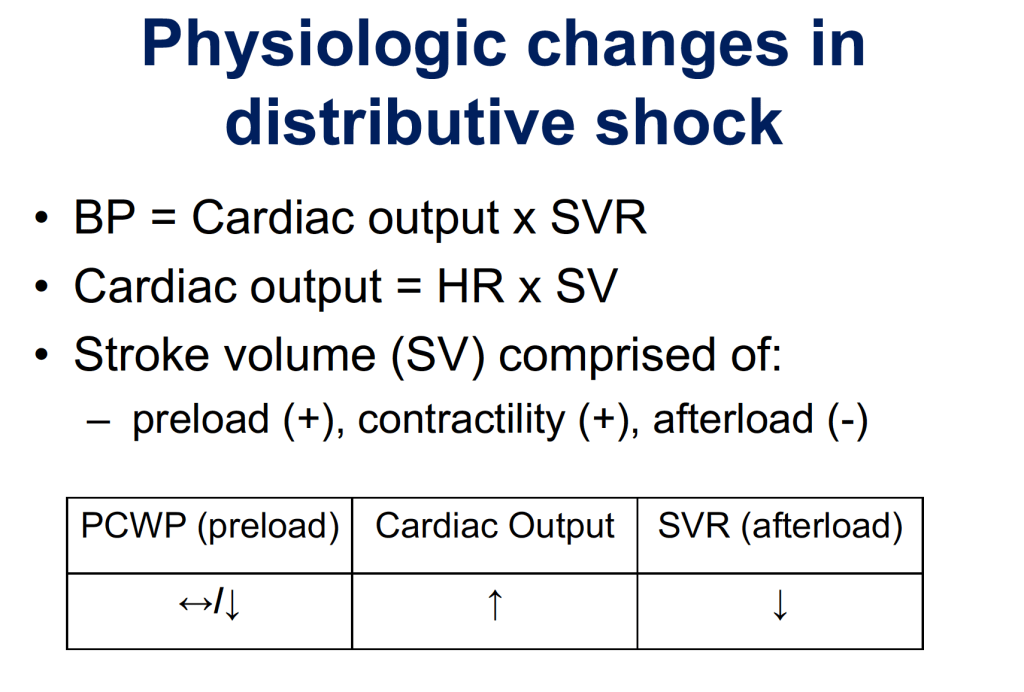
Septic Shock is a type of Distributive shock: Loss of peripheral and vascular resistance. There are three types of distributive shock: Septic, Anaphylactic, Neurogenic (Spinal cord injury)
 Arjun's Residency Blog