
- Should try to maintain your CV in order to ensure you’re UpToDate on everything you have done.
- CV can be the first impression of you to people.
- Showcases organization, attention to detail
- Resume is not the same as a CV:
- Resumes are more tailored to the job you are applying too CV’s are longer with more detail ICEBERG model helps defines the difference. The top of the iceberg is the resume, but the CV is the whole ICBERG. CV is a document of your life as a professional, of everything that makes you a professionalCV lists things such as:
- RotationsPresentations Professional services Awards Education Community services
- Resumes are more tailored to the job you are applying too CV’s are longer with more detail ICEBERG model helps defines the difference. The top of the iceberg is the resume, but the CV is the whole ICBERG. CV is a document of your life as a professional, of everything that makes you a professionalCV lists things such as:
- Good to keep the CV updated so that you can create a resume off of it
- CV showcases your trajectory. It shows how much other stuff you do along with your job.
- CV shows elevation, meaning it shows that you are continually learning
- Need to showcase that you have both people and technical skills
- Having a CV allows you to identify gaps for you to fill, i.e. you see that you have not presented in a while so then you can go out and present
- Have a date each month where you go and update your CV
- What should go in:
- Degrees Residency and rotationsCommittee/Organizations Certifications Professional licence Research and research in project Peer reviewed/invited presentations Section for abstracts Newsletters Manuscripts Skills Continuing education Accredited events If you have been a preceptor Theundercoverrecruiter.com (shows what not to put in the CV)
Fluid and Lytes:
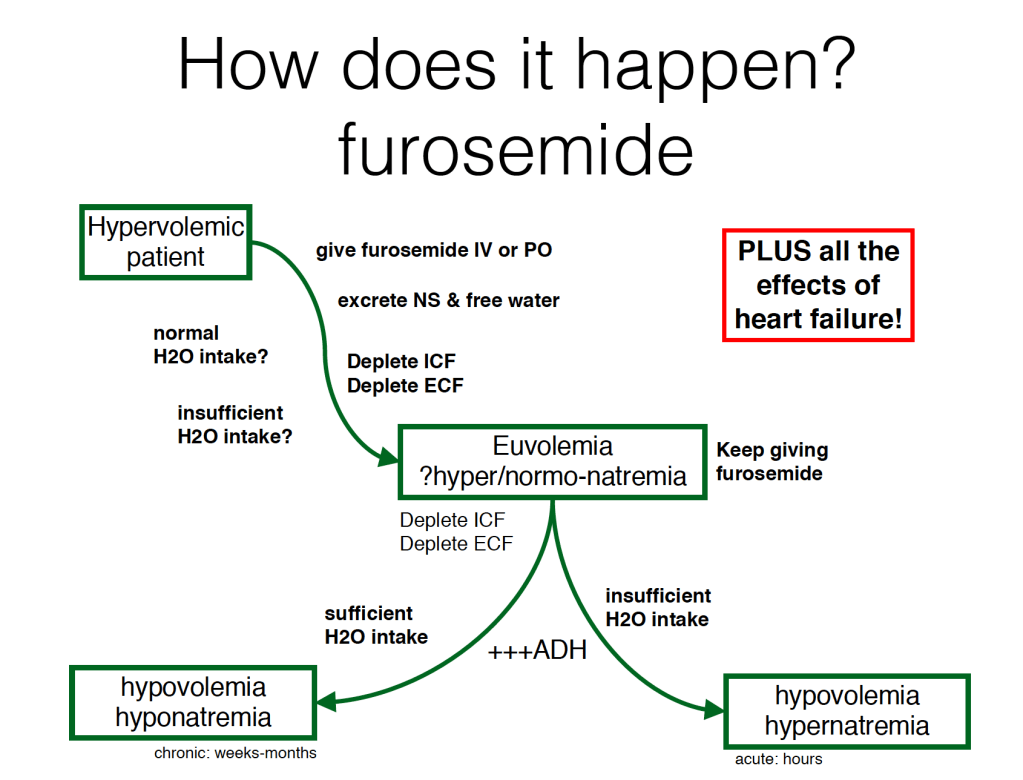
http://static1.1.sqspcdn.com/static/f/1097468/28188582/1568662967263/Na-H2O_Assessment_and_Therapeutics_PLOP_1-pager_Loewen.pdf?token=Cwg4zP%2FnXWxZ1xJglX%2ByXjq9IIM%3D (This is a link to Dr. Loewens one pager for understanding Sodium and Water balance.


Types of AKI:
- Pre-renal AKI: Main causes: hypovolemia. Some drug causes include: ACEI, NSAID, Diuretics, Calcineurin inhibitors, Amphotericin B
- Intra-renal AKI which is a result of damage to the renal structures which includes: acute tubular necrosis, interstitial nephritis, and vascular causes
- Post renal AKI: due to obstruction
Acyclovir can cause acute tubular necrosis and it can present as snow (crystals) in the urine. In order to prevent this patients should be hydrated with NS before each dose.
 Arjun's Residency Blog